
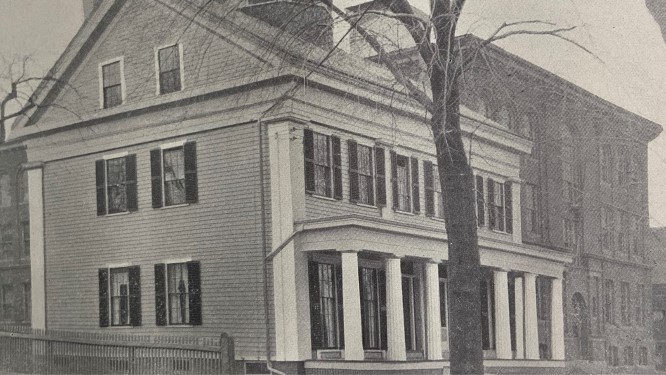
The Industrial School for Girls, 1911

The Industrial School for Girls, 1911

Located at 41 Atherton Street was the Industrial School for Girls, a vocational school aimed at helping young women secure trade jobs. The school opened on October 16, 1911 and originally offered classes in dress making, millinery, and supplementary training in subjects such as English and arithmetic. As the school grew in popularity, additional courses in household…
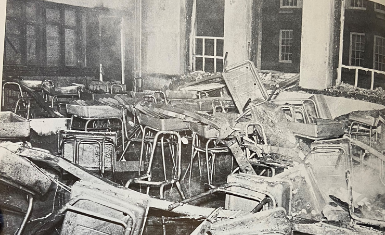
The Blizzard of ’78

While weather forecasting had improved by the late 1970’s, many people still believed that the forecasts were inaccurate most of the time. The day before the blizzard started, most people believed that it wouldn’t turn out to be that big of a problem. Workers and students went about their day like it was a normal…

Pitching in During WWI: SHS Students to the Rescue

Pitching in During WWI: SHS Students to the Rescue

The development and improvement of new weaponry made World War I the bloodiest war of its time. When Washington expressed a need for surgical dressings, those who could help offered up their time, including some Somerville High School students. During the war, Somerville High formed the Somerville High School Patriotic Association to help with the…

Sam Walter Foss: SPL Librarian, Journalist, and Poet, 1858-1911

We have had some amazing library staff over the years. One of our more famous staff members is librarian Sam Walter Foss. Sam Walter Foss was born in Candia, New Hampshire in 1858 to Dyer and Polly Foss. Sam spent his childhood helping with his father’s farm and would later attend Portsmouth High School. After…

| |

Lamps of Learning at the West Branch Library, 1909

Next time you are out and about by the West Branch Library in Davis Square – since we can’t yet go in – take a moment to appreciate the details of the entrance to the building that has welcomed readers for more than 100 years. Lamps are positioned on either side of the staircase, and on the…

The SPL Traveling Library, 1901

The library bookmobile is one way that libraries can meet their users who might not be able to use the library ordinarily. Bookmobiles date way back in the United States, beginning around the early 1900s. Back then they were typically referred to as “traveling libraries” or “wagon libraries”. Libraries would use various forms of transportation, such as bicycles,…